
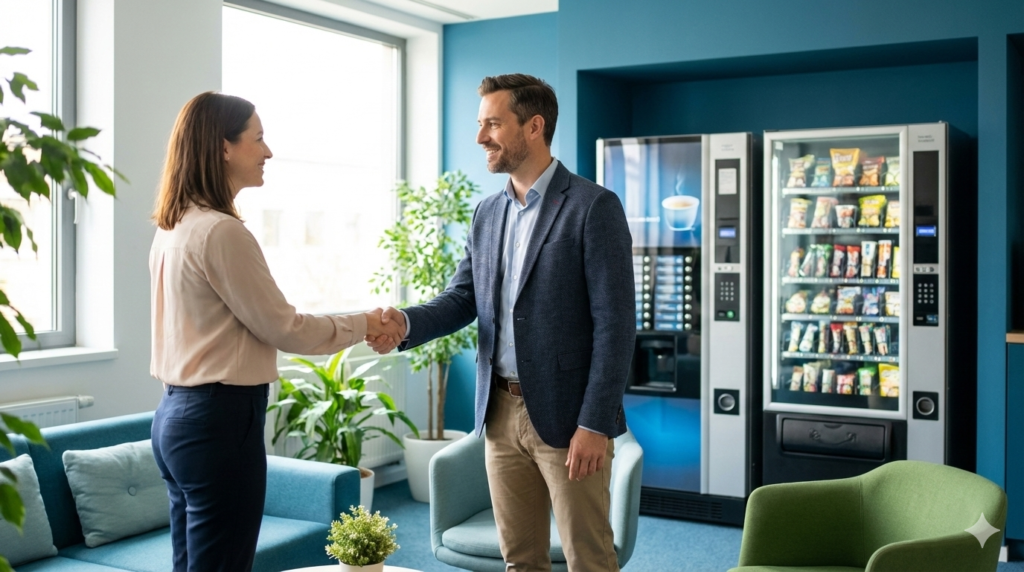
Starting or growing a vending machine business comes down to one critical skill: finding great locations. You can have the best machines, the perfect product mix, and competitive pricing, but without vending machine clients who want to host your equipment, you’re stuck.
The good news? There are proven ways to connect with potential clients that actually work. Whether you’re just starting out or looking to expand your existing routes, these three approaches will help you build a steady pipeline of quality locations.
Let’s dive into the three most effective methods for landing vending machine clients in today’s market.
The vending industry is competitive, but it’s also full of opportunity. Businesses are always looking for convenient amenities for their employees and visitors. Your job is to make it easy for them to say yes to your services.
The key is consistency. Most successful vending operators don’t rely on just one method – they use a combination of approaches to keep their pipeline full. Some locations will come from networking, others from direct outreach, and still others from digital advertising.
What makes someone choose your vending service over a competitor? Usually, it’s about trust, convenience, and showing up at the right time.
There’s something powerful about meeting people face-to-face. In-person networking remains one of the most effective ways to get vending machine clients because it builds trust and creates memorable connections.
Local business organizations are goldmines for vending operators. Consider joining:
When you show up consistently at these events, people start to know you as “the vending person.” That recognition translates into referrals and direct opportunities.
Don’t just show up and hand out business cards. Here’s what actually works:
Be genuinely interested in others. Ask business owners about their challenges. When they mention employee satisfaction or workplace amenities, that’s your natural opening to discuss vending solutions.
Share success stories. Instead of a sales pitch, tell a quick story about how you helped a similar business improve their break room experience. Real examples are more compelling than generic marketing speak.
Follow up consistently. After meeting someone, send a quick email or LinkedIn message. Reference your conversation and offer to provide more information about vending solutions when they’re ready.
The best vending clients often come from referrals within your network. One happy location can lead to three more introductions.
Don’t expect immediate results. Networking is a long-game strategy. You might meet someone in January who introduces you to a perfect location in June. The key is staying visible and top-of-mind.
Quick tip: Bring something memorable to networking events beyond business cards. Some operators bring sample snacks or photos of their cleanest, most well-maintained vending machines. Give people something tangible to remember you by.

While it might feel old-school, walking into businesses and introducing yourself works remarkably well for landing vending machine clients. Many successful operators build their entire route this way.
You’re solving a real problem. Many businesses want vending services but haven’t gotten around to finding a provider. When you show up at the right time, you’re making their life easier.
You stand out. In an age of emails and digital ads, a friendly face at the door is memorable. Plus, you can read the room and adjust your approach in real-time.
You get immediate feedback. Unlike digital marketing where you wonder if anyone saw your ad, direct outreach gives you instant yes/no/maybe responses.
Focus your efforts on places with at least 40-50 employees – that’s typically the minimum size where vending makes economic sense for both you and the business.
High-potential locations include:
Pro tip: Look for buildings with visible parking lots. If you can count 30+ cars, there are probably enough people inside to support a vending machine.
Keep it simple and friendly. Here’s a framework that works:
“Hi, I’m [Your Name] with [Your Vending Company]. I specialize in providing vending solutions for businesses in the area. Do you currently have vending services, or is that something you’ve thought about offering your team?”
If they say yes, they already have service: “Great! If you ever need a backup provider or aren’t happy with your current service, here’s my card. I’d love to earn your business.”
If they say no or seem interested: “I’d love to show you what we can do. Do you have a few minutes now, or would next week be better for a quick conversation?”
“We don’t have space.” → “I work with facilities of all sizes. Sometimes we can find creative spots you haven’t considered, like a hallway corner or unused break room space.”
“We can’t afford it.” → “Actually, vending services are typically free for the business. I handle all the costs and maintenance – you just provide the space.”
“I need to check with my boss.” → “Totally understand. Can I leave some information with you? I’ll also send you an email you can forward to the decision-maker.”
This is where most people fail. You can’t just visit once and give up.
Create a simple tracking system (even a spreadsheet works) with:
Check back with “warm” leads in 2-3 weeks. Some locations need time to think, finish their current contract, or get approval from higher-ups.
How often should you visit businesses? If you’re new to an area, aim for 10-15 visits per day. You’ll probably get 1-2 serious conversations and maybe 1 placement per week of consistent effort. Those numbers improve as you refine your approach.
While face-to-face methods build strong relationships, Google Ads let you reach vending machine clients who are actively searching for your services right now. When someone types “vending machine service near me,” you want to be the first result they see.
High intent searches. People searching for vending services have a specific need. They’re not browsing – they’re ready to take action.
Geo-targeting precision. You can show your ads only to businesses within your service area, whether that’s a 20-mile radius or specific neighborhoods.
Measurable results. Unlike networking where ROI is fuzzy, Google Ads show you exactly how many people clicked, called, or filled out your contact form.
You don’t need to be a marketing expert to run effective Google Ads. Here’s a beginner-friendly approach:
Start with search ads. These are the text ads that appear when someone searches on Google. They’re simpler than display or video ads and typically deliver better results for local service businesses.
Target the right keywords. Focus on terms like:
Set a realistic budget. You can start with as little as $300-500 per month. In smaller markets, this might get you 20-30 clicks from potential clients. In larger cities, you might need $1,000+ monthly to stay competitive.
Your ad needs to answer one question: “Why should they call you instead of scrolling to the next result?”
Effective ad elements:
Example ad:
Headline: Free Vending Machines for Your Maryland Office
Description: No upfront costs. Professional service. Fresh products weekly. Serving Baltimore businesses since 2018. Free consultation – call today!
When someone clicks your ad, where do they land? Don’t send them to your homepage – create a specific landing page focused on one action.
Your landing page should include:
Keep it simple. You don’t need fancy design – you need clarity. Make it obvious how to contact you and what happens next.
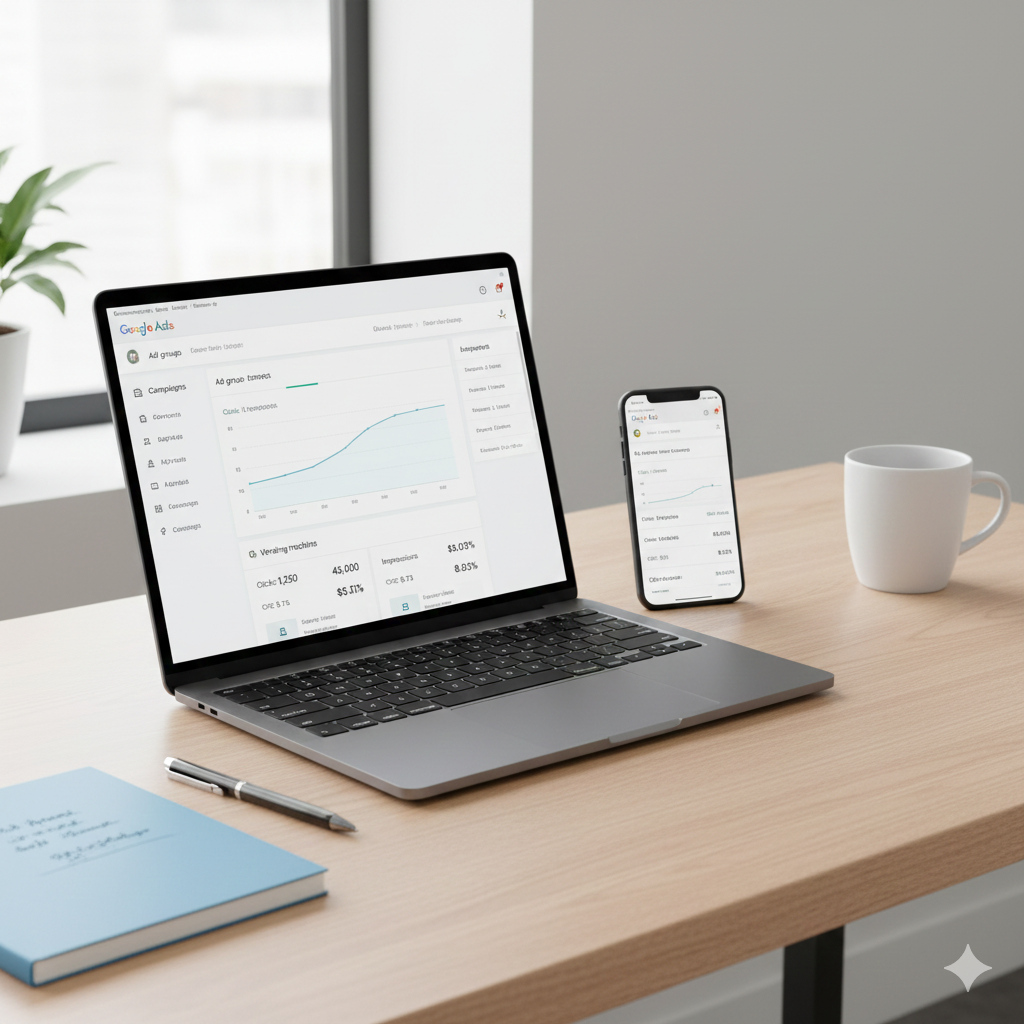
Google Ads provides detailed analytics, but focus on what matters:
A good benchmark: if you’re spending $500/month and getting 5-10 solid leads, you’re on the right track. Even if only 1-2 become actual placements, that can pay for months of advertising.
Pause if: You’re getting lots of clicks but no leads, or the leads are completely unqualified (residential requests, areas outside your service zone, extremely small businesses).
Scale up if: You’re consistently getting quality leads and converting them to placements. Increase your budget by 25-50% and monitor whether lead quality stays high.
Pro tip: Run your ads Monday-Friday during business hours (8am-5pm). You’ll waste less budget on clicks from people who can’t make decisions or aren’t serious prospects.
The most successful vending operators don’t choose one method – they master all three and let each approach feed into the others.
Ready to start landing more vending machine clients? Here’s your week-by-week action plan:
What’s the one thing you could do this week to start building your client pipeline? Pick the method that feels most comfortable and commit to taking action. You can always add the other approaches later.
Growing a vending business is fundamentally about relationships and showing up consistently. Whether you’re shaking hands at a Chamber mixer, knocking on office doors, or running targeted Google campaigns, the goal is the same: connect with businesses that need what you offer.
The operators who succeed are the ones who treat client acquisition as a system, not a one-time effort. They network regularly, visit businesses weekly, and maintain a consistent online presence. Over time, these efforts compound – your network grows, your reputation spreads, and the Google algorithm rewards your sustained ad campaigns.
Start with what feels natural. If you’re extroverted and love meeting people, lean into networking and direct outreach. If you prefer systems and data, begin with Google Ads and optimize from there. The beauty of having three distinct approaches is that you can customize your strategy to your strengths.
The vending machine clients you need are out there right now. They’re attending the same networking events you could join, working in the offices you could visit, and searching Google for solutions you provide. The only question is: will you be there when they’re ready?
For my first location, it was a google ad campaign that sealed the deal. Learn about the best ways to get clients in 2026: Top 3 Ways to Get Vending Machine Clients 2026