![5 Vibe Coding Vending Business Tools You Can Build Today [2026]](https://blazevending.com/wp-content/uploads/2026/02/Gemini_Generated_Image_f7t4hnf7t4hnf7t4.png)
If you run a vending operation, you’ve probably felt this before. You’re paying for one subscription to plan routes, another to track inventory, another for sales reporting, and somehow none of them talk to each other. What if you could just build the exact tools your business needs? Tools customized to your routes, your machines, and your margins. No hiring a developer. No learning to code from scratch.
That’s the promise of vibe coding vending business tools, and in 2026, it’s not just possible. It’s practical. Vibe coding is an AI-assisted approach to building software where you describe what you want in plain English and AI generates the working code for you. The term was coined by AI researcher Andrej Karpathy in early 2025, and the approach has exploded since then. According to Stack Overflow’s 2025 developer survey, 84% of developers now use or plan to use AI coding tools. But here’s what matters: the real story isn’t about professional developers. It’s about people like you. Operators, solopreneurs, and small business owners who can now build custom software that fits their business like a glove.
All things being equal, the vending operator who can create their own custom software will outperform the one who can’t. Not because the software is magic, but because the process saves real money and builds skills that compound over time. Let me walk you through how to make this work for your operation.
Think of it like this. Instead of learning a foreign language to order food in another country, you’ve got a brilliant translator sitting right next to you. You describe what you want in plain English. Something like, “I need a spreadsheet that automatically calculates my profit margin per machine based on weekly restocking costs.” And the AI writes the code to make it happen.
Tools like Cursor ($20/month), Claude, Lovable, and Replit have made this accessible to anyone willing to try. You don’t need a computer science degree. You don’t even need to understand what the code does under the hood for simple tools. You just need to clearly describe the problem you want to solve.
“English is the new programming language. You don’t need to master syntax. You need to master describing what your business actually needs.”
Here’s why this matters specifically for vending. Our industry runs on tight margins and operational efficiency. Most off-the-shelf software is built for general retail or logistics companies with hundreds of employees. A solo operator running 15 smart coolers doesn’t need enterprise software. They need precise, lightweight tools that solve their specific problems. Vibe coding for your vending business means building exactly that.
The cost savings are real, too. The average small business spends between $100 and $300 per month per employee on SaaS subscriptions. For a lean vending operation, even trimming $150/month in subscription tools you’ve replaced with custom-built alternatives puts $1,800 back in your pocket annually. That’s a machine payment.
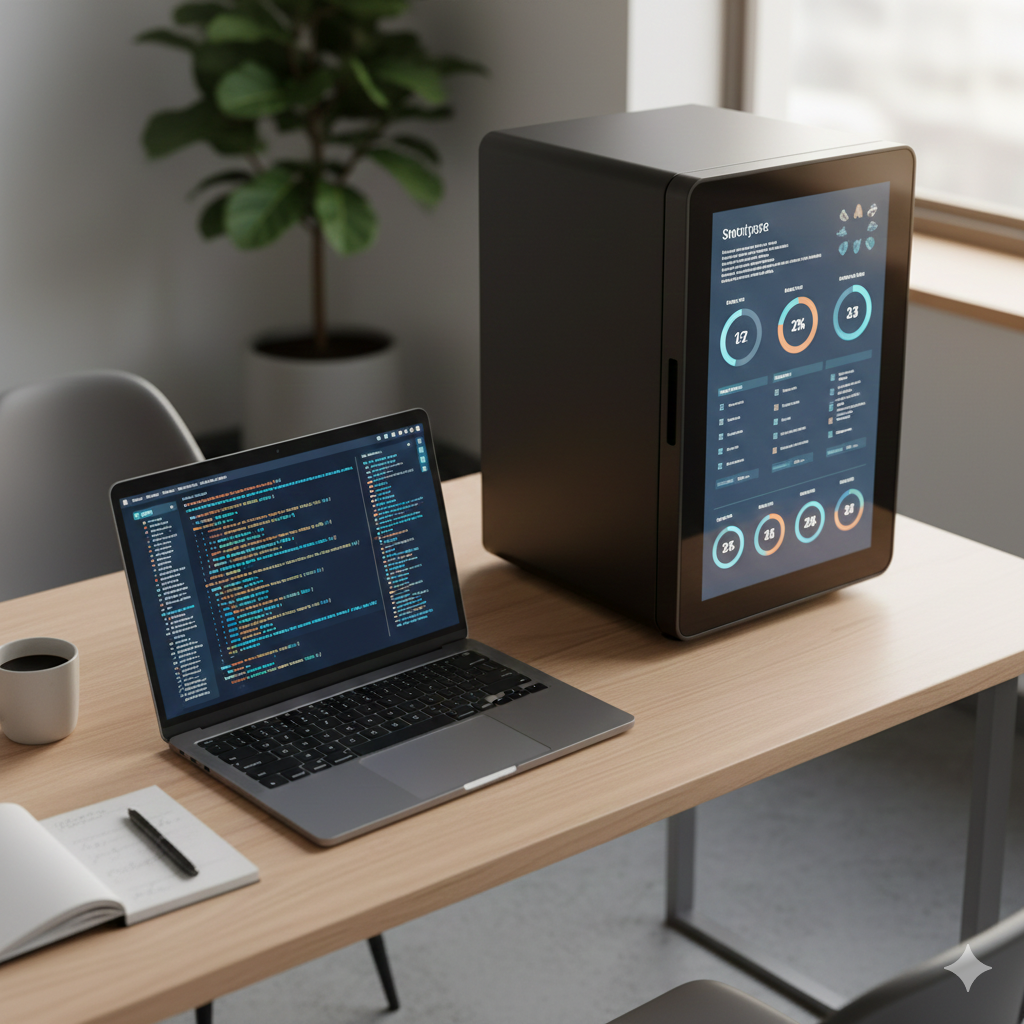
You don’t have to start with something complicated. In fact, the best approach is to start small, prove the concept to yourself, and build confidence from there. Here are five tools that vending operators can realistically build using vibe coding, ranked from simplest to most ambitious.
What it does: Pulls your sales data into a single view showing revenue, cost of goods, and net margin for each machine. Updated daily.
Why it matters: Most operators check their numbers in fragmented dashboards or, worse, messy spreadsheets. A custom dashboard shows you exactly what’s making money and what’s not, presented the way your brain works.
Vibe coding difficulty: Beginner. This is a great first project. You can describe it to Claude or Cursor and have a working prototype by the end of an afternoon.
Have you ever looked at your monthly numbers and wished they were just… easier to read? That’s the exact itch this tool scratches.
What it does: Based on your sales velocity per product per location, it tells you exactly what to load on the truck before each route run.
Why it matters: Over-stocking ties up cash and creates waste. Under-stocking means lost sales. This tool puts data-driven restocking right at your fingertips without paying for inventory management software that’s 90% features you’ll never touch.
Vibe coding difficulty: Beginner to Intermediate. Requires feeding in some historical sales data, but the logic is straightforward.
What it does: Takes your machine locations and service schedule, then suggests the most efficient driving route based on priority (which machines need restocking soonest) and geography.
Why it matters: Gas and time are two of the biggest costs in a vending operation. Even saving 20 minutes per route run, three times a week, gives you back over 50 hours a year. That’s a full work week you can reinvest in growth.
Vibe coding difficulty: Intermediate. You’ll work with mapping APIs, but AI handles the heavy lifting of writing the actual integration code.
What it does: Grades each of your locations on a composite score. Revenue per square foot, spoilage rate, foot traffic patterns, and payment method breakdown.
Why it matters: Not all locations are created equal, and knowing which ones to double down on (or walk away from) is one of the highest-leverage decisions in vending operations. Building a custom scorecard using vibe coding for your vending business gives you an analytical tool that no generic platform offers out of the box.
Vibe coding difficulty: Intermediate. Involves pulling data from multiple sources, but each piece on its own is simple.
“The operator who knows their numbers doesn’t just survive. They make decisions that compound. Custom tools are how you build that advantage.”
What it does: Sends you a daily or weekly summary via text, email, or Telegram. Revenue highlights, machines that need attention, inventory alerts. All without you logging into anything.
Why it matters: Delegation to automation is the first kind of delegation every operator should master. This is your business talking to you proactively instead of waiting for you to come check on it.
Vibe coding difficulty: Intermediate to Advanced. Involves connecting APIs and setting up scheduled tasks, but AI coding tools handle most of the wiring for you.
What would it feel like to wake up and already know which machines need attention today, before you even open your laptop?
Let’s talk about the two kinds of return you get from building vibe coding vending business tools.
Here’s a conservative breakdown of what replacing just a few SaaS subscriptions could save you:
Potential savings: $95-$240/month, or $1,140-$2,880 per year.
Your cost? A Cursor subscription at $20/month, or even free tools like Claude and Replit. The math works in your favor pretty quickly.
Here’s the part most people miss. Building vibe coding vending business tools teaches you how to think in systems. Every tool you build strengthens your ability to identify bottlenecks, structure data, and automate decisions. These are the exact skills that separate operators who plateau at 10 machines from those who scale to 50.
According to research from Y Combinator, 25% of startups in their Winter 2025 cohort had codebases that were over 95% AI-generated. These aren’t hobbyists. They’re funded companies using the same vibe coding tools available to you right now. The playing field has never been more level.
“You’re not just building software. You’re building the skill of building software. And that skill pays dividends on every problem you’ll face in your business.”